Forced labour regulation has shifted rapidly from a defined compliance requirement into a decisive factor in how goods move across global markets.
Across the United States, the European Union and other jurisdictions, authorities are strengthening import controls and applying them with greater consistency and reach. Enforcement is extending beyond historically high-risk regions, and scrutiny is moving deeper into supply chains, often several tiers removed from the finished product.
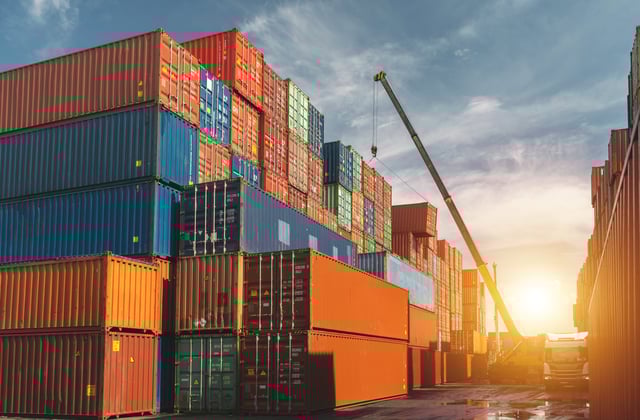
This change is already visible in how trade is being managed, with shipments being detained, withdrawn, or refused entry where exposure cannot be sufficiently addressed.
Forced labour has long been recognised within sustainability and compliance frameworks, but recent regulatory developments are bringing it into further into focus. As enforcement expands across sectors and becomes embedded within trade mechanisms, organisations that previously considered their exposure to be limited are reassessing their position, particularly where visibility into upstream suppliers remains inconsistent.
Market access is becoming more closely linked to the ability to evidence traceability and due diligence in a way that withstands regulatory scrutiny. Organisations that have invested in these capabilities are better positioned to respond to investigation and maintain continuity, while those without them face increasing disruption at the border and growing pressure to adapt at pace.
A global regulatory turning point
Many organisations continue to operate with limited visibility across complex, multi-tier supply chains, where indirect sourcing relationships can obscure risk. With an estimated 28 million people in forced labour globally, exposure remains significant, particularly for both migrant and domestic workers. Data from EiQ, LRQA’s proprietary tool, continues to highlight elevated risk in geographies such as Malaysia, Taiwan, Japan and Thailand, where practices such as excessive recruitment fees, passport retention and inadequate employment contracts persist. Emerging insights from Turkey and China point to increasing pressure on domestic workers, including mandatory health check fees.
In 2024, EiQ identified significant forced labour violations among suppliers in key markets including India, Mexico and Malaysia, reinforcing the need for robust due diligence. These indicators continue to evolve, requiring stronger audit approaches, ongoing monitoring and deeper supply chain transparency, particularly in sectors such as agriculture, textiles and apparel, electronics, construction and mining, where multi layered supplier networks increase exposure.
Governments across the EU, United States, Canada, Mexico and several Asian jurisdictions are using market access restrictions more actively to address forced labour. Enforcement activity is increasing, penalties for noncompliance are becoming more severe and expectations for transparency are advancing at pace.
Some of the main regulations include:
- S. UFLPA – United States (import market): Applies to goods made wholly or partly in Xinjiang or by entities on the UFLPA Entity List. These goods are presumed to be produced with forced labour and are barred from entry unless importers can provide clear and convincing evidence, giving authorities broad discretion to reject shipments.
- Forced labour regulation (EUFLR) – EU market (imports, sales, exports): Entering into force in December 2027, the EUFLR prohibits any product made with forced labour from being placed on or exported from the EU market. The regulation applies regardless of company size, sector, product volume, or the location of the violation.
- Canada – Fighting Against Forced Labour and Child Labour in Supply Chains Act (S 211): Requires organisations to report on actions taken to prevent and reduce forced and child labour and includes an import prohibition enforced at the border.
- Mexico – Forced and child labour import ban: Introduces restrictions aligned with USMCA commitments, reinforcing expectations for due diligence across the region.
Forced labour prohibitions are also becoming embedded within trade agreements. Countries including Malaysia, Bangladesh, Cambodia, Taiwan, Indonesia, El Salvador, Guatemala and Argentina have committed to implementing bans through agreements with the United States. Recent agreements with Argentina and Guatemala reflect a growing recognition of U.S. determinations under Section 307 of the Tariff Act. These developments are extending compliance expectations beyond national borders, requiring suppliers globally to strengthen transparency and due diligence practices.
Enforcement is expanding and becoming more sophisticated
Under the UFLPA, U.S. Customs and Border Protection has reviewed more than 18,000 shipments valued at over USD 3.8 billion. Scrutiny continues to focus on sectors with complex, multi-tier supply chains, including automotive, aerospace, electronics, textiles and agriculture.
Enforcement patterns remain concentrated in specific high-risk regions. Since 1950, CBP has issued 55 Withhold Release Orders, with a significant proportion linked to China, alongside cases in Mexico and other regions. Organisations sourcing from these areas face increased exposure under UFLPA requirements.
A shift in enforcement approach is also emerging. During the Biden administration, attention centred on higher value shipments, including solar components, reflecting upstream risks in polysilicon and electronics supply chains. More recent enforcement trends indicate a broader focus on lower value, higher volume shipments, extending across additional geographies such as Mexico, Nicaragua, Vietnam and Cambodia. This has widened the scope of scrutiny and increased the number of supply chain actors potentially affected.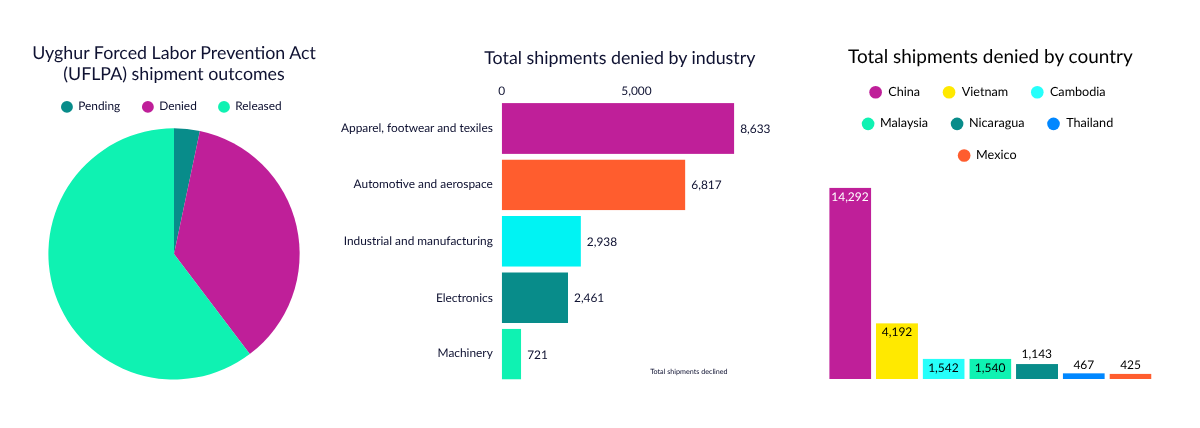
USA Customs and Border Protection (CBP), 2026
On March 12, 2026, the U.S. Trade Representative launched Section 301 investigations into 60 economies, marking a further escalation in the use of trade policy to address forced labour. By linking forced labour to unfair cost advantages and risks to U.S. commerce, this approach signals the potential for additional tariffs or import restrictions where enforcement is deemed insufficient. For organisations operating across global markets, this reinforces the connection between labour practices and competitive positioning.
Forced labour regulations are reshaping market dynamics
Regulatory developments are already influencing trade flows and operational decisions. Under the UFLPA, thousands of shipments across sectors including electronics, solar components, apparel, automotive parts and agriculture have been detained, creating delays, financial impact and supply chain disruption. These cases extend beyond China, with links to upstream inputs in regions such as Vietnam, Malaysia, Cambodia and Mexico triggering detentions and extended reviews.
The EU Forced Labour Regulation is expected to introduce similar disruption. Authorities will have the power to withdraw products, block imports and exports and require disposal of goods linked to forced labour. High risk sectors such as cotton, tomatoes, solar components and apparel are likely to face increased scrutiny. Because investigations can span all supply chain tiers, even limited upstream exposure may result in product withdrawal across the EU market.
These developments have elevated forced labour into a core strategic consideration. Organisations are navigating shipment detentions, operational delays, investor scrutiny and reputational exposure. While regulatory requirements differ, the expectation of evidence remains consistent. The ability to respond clearly and credibly to scrutiny is becoming central to maintaining market access.
Traditional supplier declarations and broad compliance statements no longer meet regulatory expectations. Greater emphasis is being placed on verifiable evidence, including documented risk assessments, worker engagement and independent verification. Data led insights are increasingly used to define investigative scope and prioritise areas for deeper review.
Across the market, organisations are also recognising that visibility remains uneven. Many continue to concentrate oversight at the first tier of the supply chain, leaving deeper layers comparatively opaque, even as risk often resides further upstream.
Organisations that are maintaining continuity in market access are those investing in traceability, structured documentation and systems that support worker protection. Traceability is increasingly understood not as a reporting exercise, but as the foundation for effective risk management, enabling organisations to identify, prioritise and act with greater precision.
Where issues are identified, responses are becoming more structured, including reimbursement of recruitment fees, improved hiring practices, strengthened governance and enhanced grievance mechanisms.
Strategic actions for organisations
A fragmented or compliance led approach is unlikely to meet current expectations. What is required is a coordinated, evidence-based system that enables organisations to prevent, investigate and address forced labour risks across all tiers and jurisdictions. To support this shift, we invite you to explore the practical, operational recommendations included in LRQA’s submission to the European Commission’s Guidelines on the Implementation of the EU Forced Labour Regulation.
Proactive: Prevent and mitigate risk
- Map the end-to-end supply chain to build visibility from raw materials to finished goods, with a focus on higher risk upstream areas
- Align policies and governance frameworks with emerging regulations, embedding accountability at senior levels
- Conduct targeted risk assessments using ILO indicators to identify where coercion may occur
- Strengthen worker centric monitoring through interviews, site visits and unannounced audits
Responsive: Investigate and act
- Establish structured investigation pathways to respond to emerging risks
- Assess severity and root causes to guide proportionate action
- Implement clear, time bound corrective actions with suppliers
- Maintain traceable and well organised documentation to support regulatory engagement
Accountability and remedy: Addressing allegations
- Activate formal processes that ensure safe reporting and worker protection
- Conduct independent and well documented investigations
- Deliver remediation aligned to worker needs, including financial and practical support
- Use findings to strengthen governance, supplier engagement and ongoing monitoring
How LRQA supports organisations
LRQA works with organisations to address forced labour risks through a product focused, evidence-based approach to due diligence. This includes end to end supply chain mapping, risk prioritisation informed by data, governance alignment and assessments based on ILO indicators, supported by EiQ intelligence and on the ground expertise.
Where risks or allegations arise, LRQA conducts independent investigations, providing structured evidence and clear documentation to support regulatory requirements. This is combined with support for suppliers through corrective actions, capability building and practical remediation design.
LRQA also supports the development of traceability and documentation frameworks aligned to regulations such as EUFLR and UFLPA, alongside independent verification of remediation outcomes. This enables organisations to strengthen prevention, improve transparency and build due diligence systems that are operationally robust and aligned with evolving regulatory expectations.
Forced labour investigations and remediation services
Whether you are proactively identifying risk, responding to a regulatory action, managing an allegation, or strengthening your responsible sourcing programme, we provide practical, defensible solutions grounded in international standards.
FORCED LABOUR
Find out more about our services